
Perfect Angle
The Perfect Angle tourist route helps you take more interesting photographs in Svetlogorsk. Look for droplet-shaped signposts near the town’s attractions: they mark the places from which the best photographs can be taken. Symbols on the signs indicate the best time and position for taking a photograph, the position of the smartphone, and a QR code leading to the Svetlogorsk Tourist Information Center website, where information about all the route’s attractions is available.
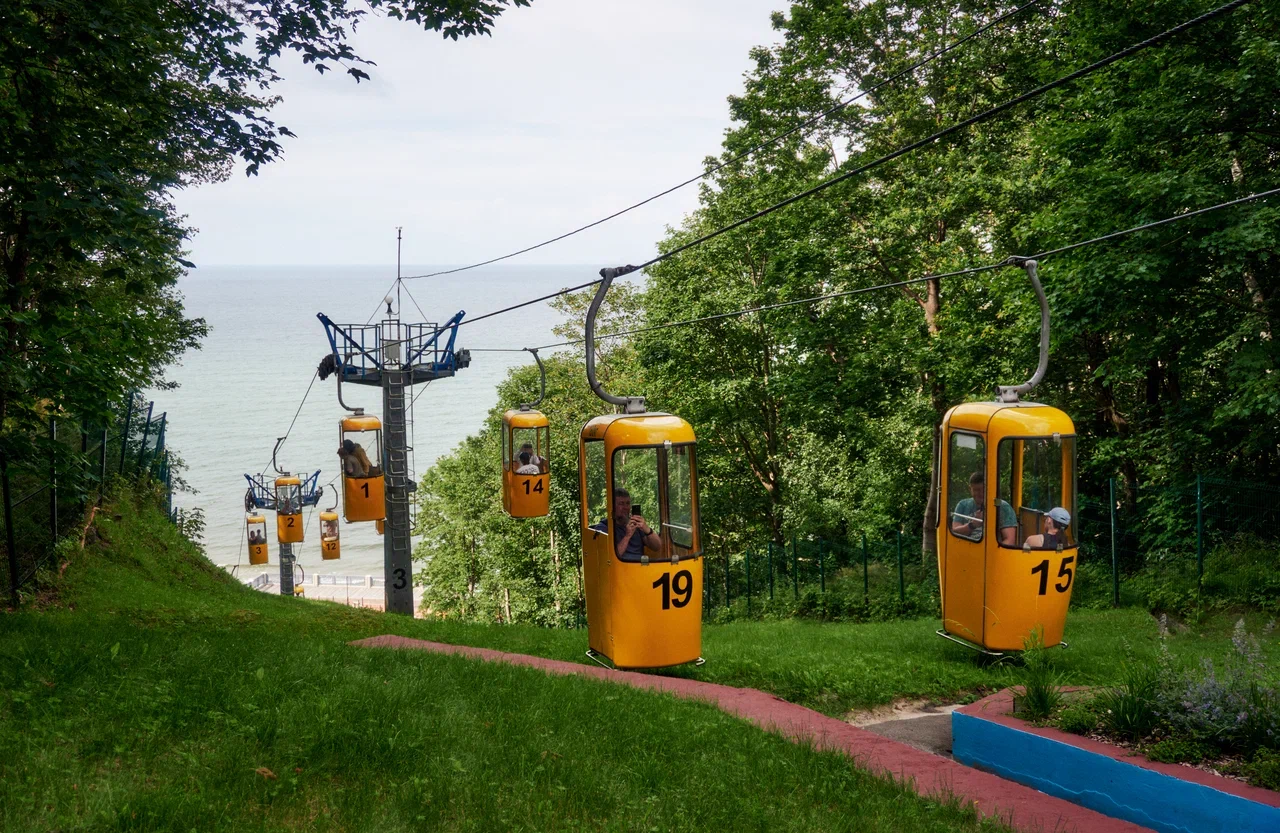
The only cable car in the Kaliningrad Region connects the seaside promenade with the upper, central part of the resort. It first began operating in 1983 and was reconstructed in 2014. The cable car is 118 metres long, with an elevation difference of 34 metres. Its speed of 0.5 metres per second allows passengers to enjoy picturesque views of the Svetlogorsk coastline.
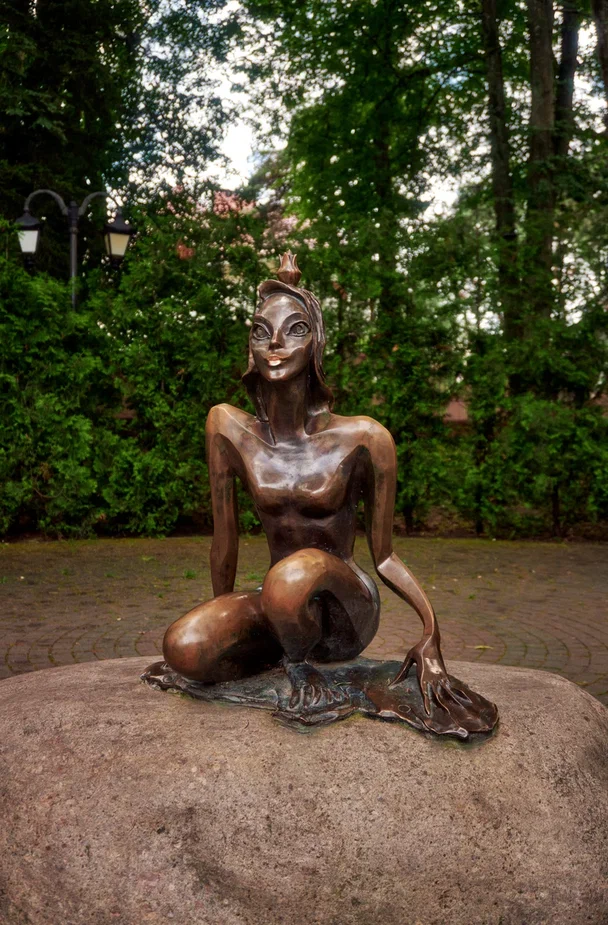
Frog Princess (Tsarevna-Lyagushka), a character from a Russian folk tale, is depicted at the moment when she has already shed her frog skin and begun to transform into a beautiful princess. According to a belief, if you exchange kisses with the princess by touching your finger first to your own lips and then to hers, your dearest wish will come true. Author: Honoured Artist of Russia Oleg Melekhov. 2006, bronze.
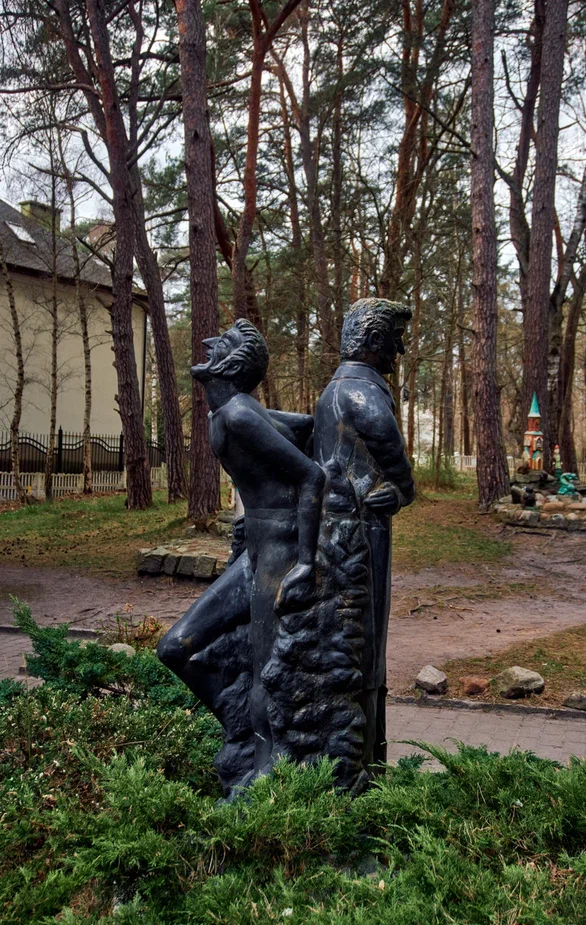
The sculpture depicts the duality of Ernst Theodor Amadeus Hoffmann's inner world: on the one hand, he was a writer of fairy tales, composer and artist, and on the other, a lawyer and civil servant. The sculpture is installed on the grounds of the Storyteller's House guest house; the author is S.N. Usachyov. Nearby, visitors can also see other sculptural compositions inspired by the writer's works, as well as a model of medieval Königsberg. The model depicts the landscape on which the medieval city stood and more than 500 architectural structures, around 30 of which are historically significant. These include the castle, cathedral, churches, fortress walls, towers, town halls and bridges.
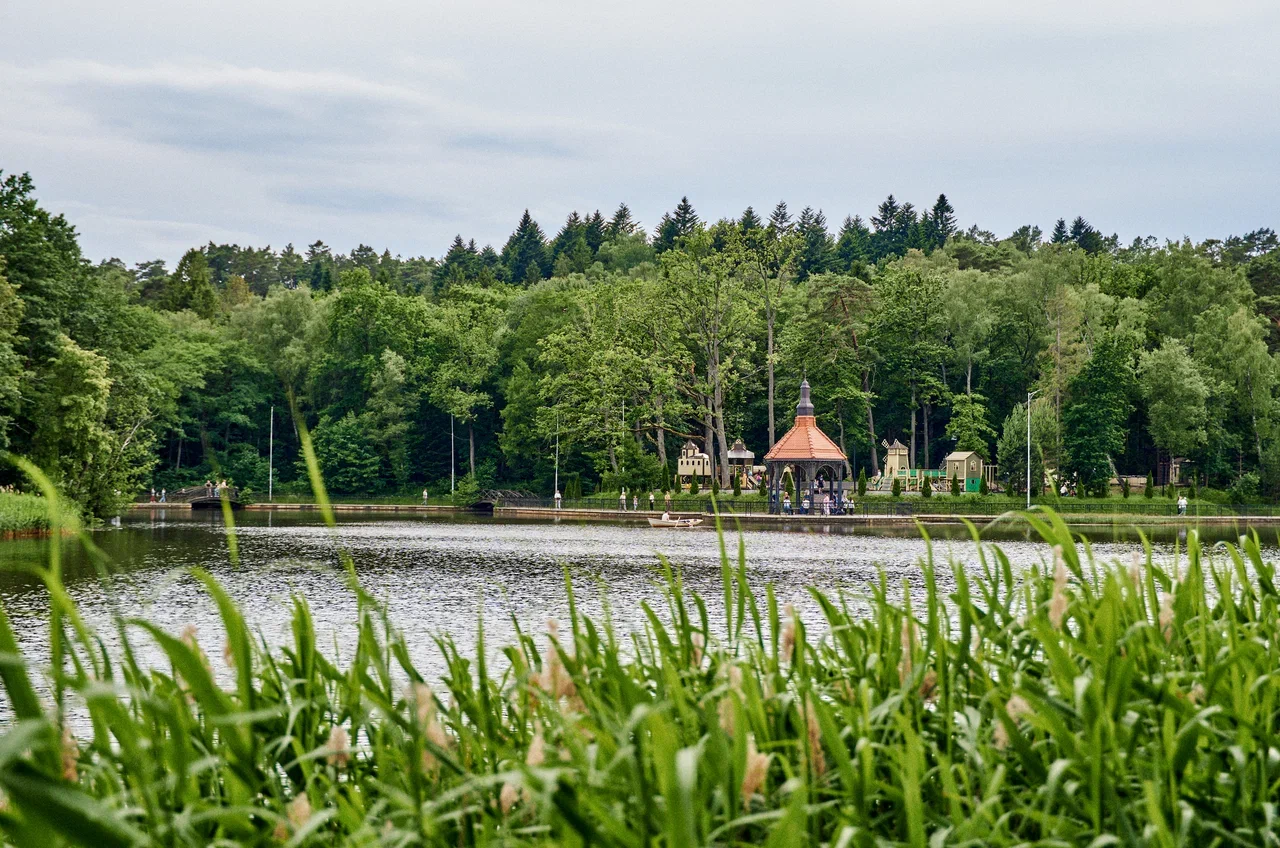
The lake appeared almost 800 years ago after knights of the Teutonic Order dammed the small Cat Stream. The resulting pond was called Mill Pond (German: Muelenteich), while the stream became known as Rauschen Mill Stream. The largest water mill on the Zemland Peninsula was located here and operated until the 1920s. Today, Tikhoye Lake is a popular recreation area for residents and visitors. Its shores are home to the picturesque Muse Creative Park, a boat station and a rope park.
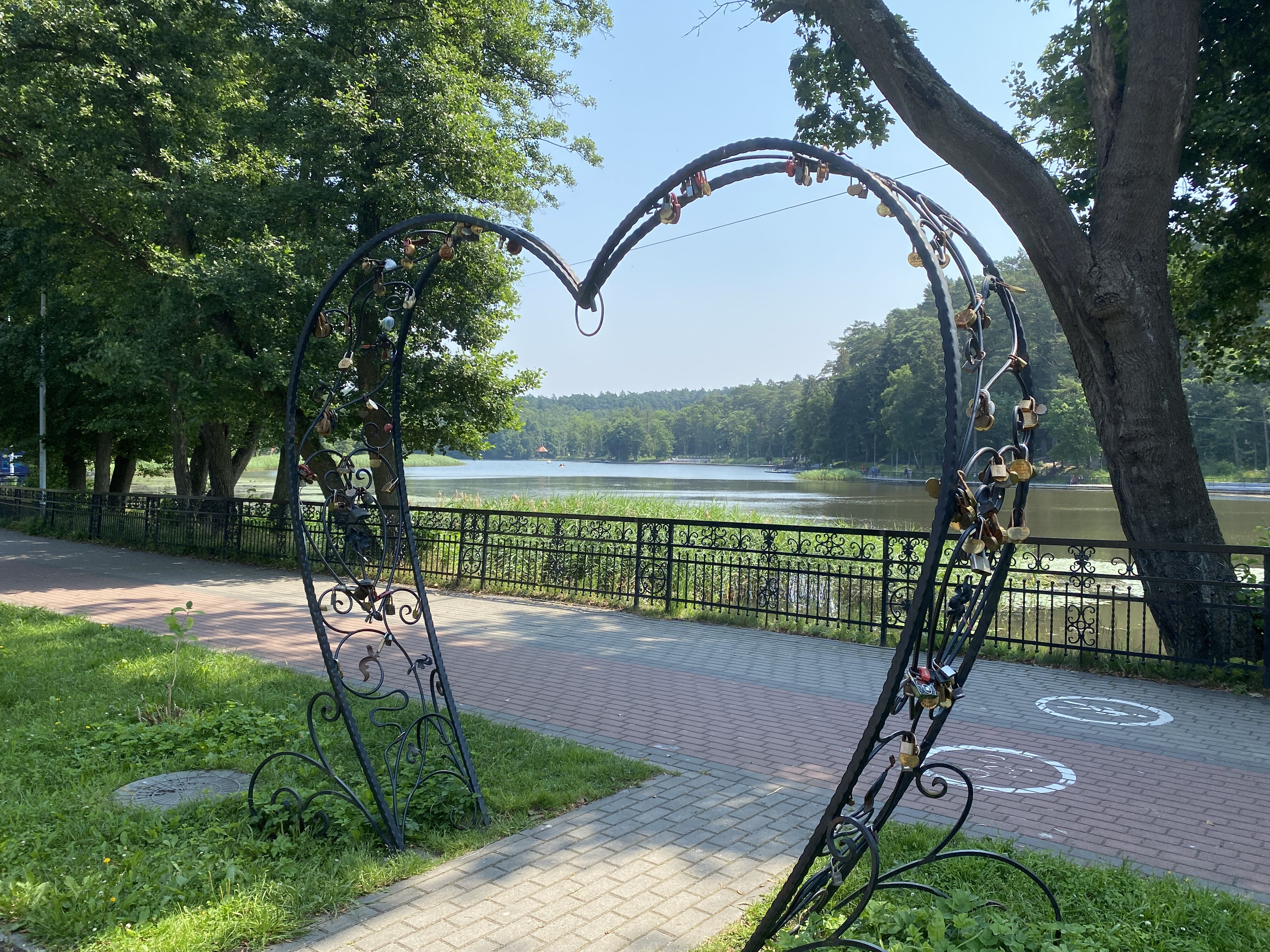
The large forged heart serves as a distinctive photo spot. The frame captures the picturesque lake, pine forest and a fountain rising directly from the water. After dark, the fountain and trees in Muse Park are illuminated with dynamic multicoloured lighting. Next to the art object are figurines of the Svetloyozhiki, Yezheo and Yezhetta, characters from the popular tourist route of the same name.
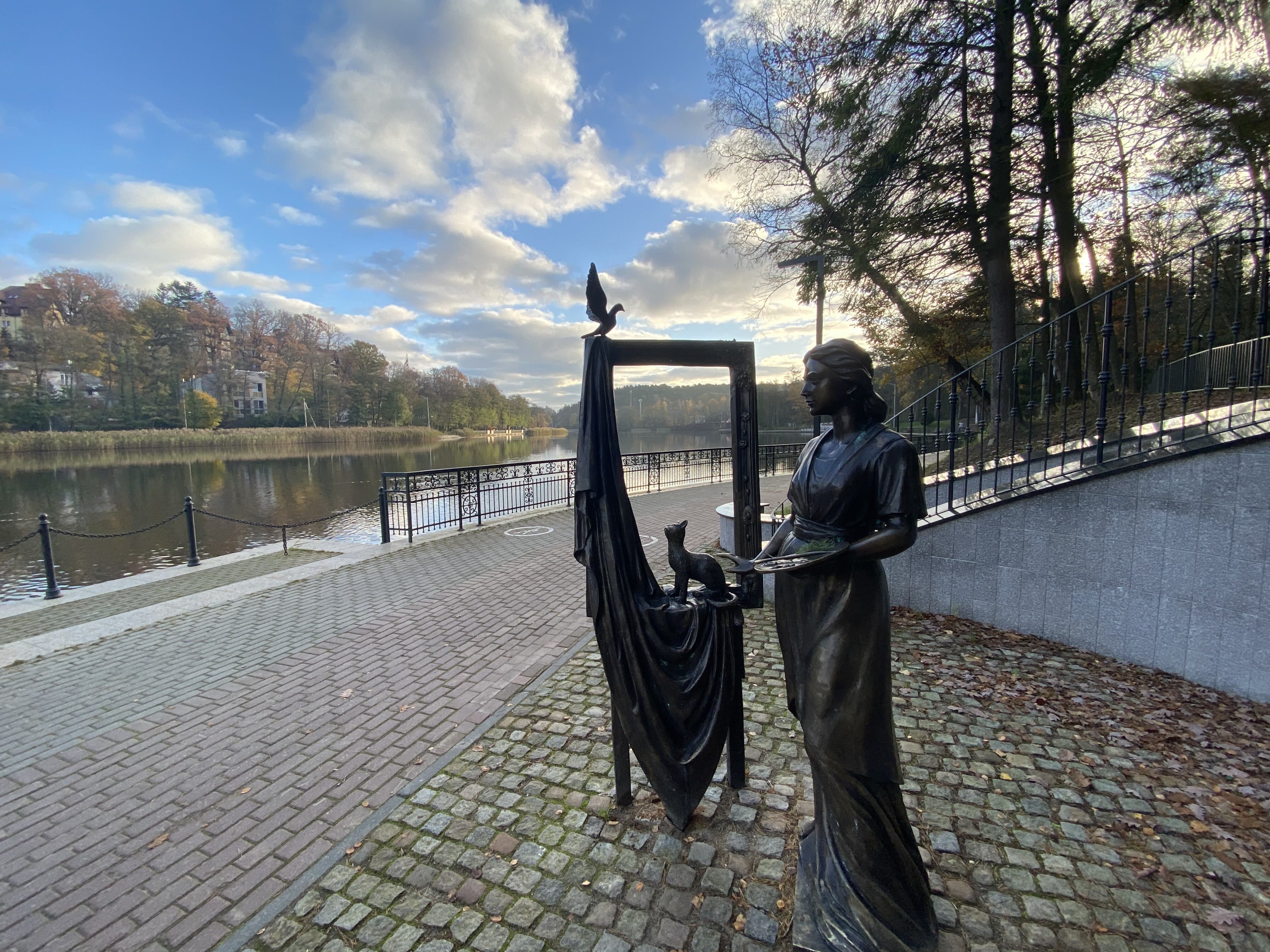
The suspended swings overlooking Tikhoye Lake are one of the art objects in Muse Creative Park. The park also features sculptures of the Muses, an artist and a violinist, a sculptural composition depicting a girl with a book, an amphitheatre, openwork gazebos and a modern children's play complex. The popular Svetloyozhiki tourist route runs through the park. Nearby is one of Svetlogorsk's natural attractions, centuries-old linden trees. The oldest is a small-leaved linden more than 450 years old. In 2013, the tree received the high nationwide status of a Monument of Living Nature and was entered into the national register of long-lived trees.
.webp)
The Old Doctor Hotel is the former Tannenhof boarding house. The boarding house building was constructed in 1910-1912. The name Tannenhof (German: Pension Tannenhoff - Spruce Yard) is associated with the hedge of low spruce trees that once surrounded the building. The two-storey house was intended as a place of rest for nurses from the Hospital of Mercy, which was known throughout Prussia. The boarding house had a large garden. After 1945, the Tannenhof boarding house became one of the buildings of the Svetlogorsk Sanatorium. In the 1990s, the building was converted into the Old Doctor Hotel.
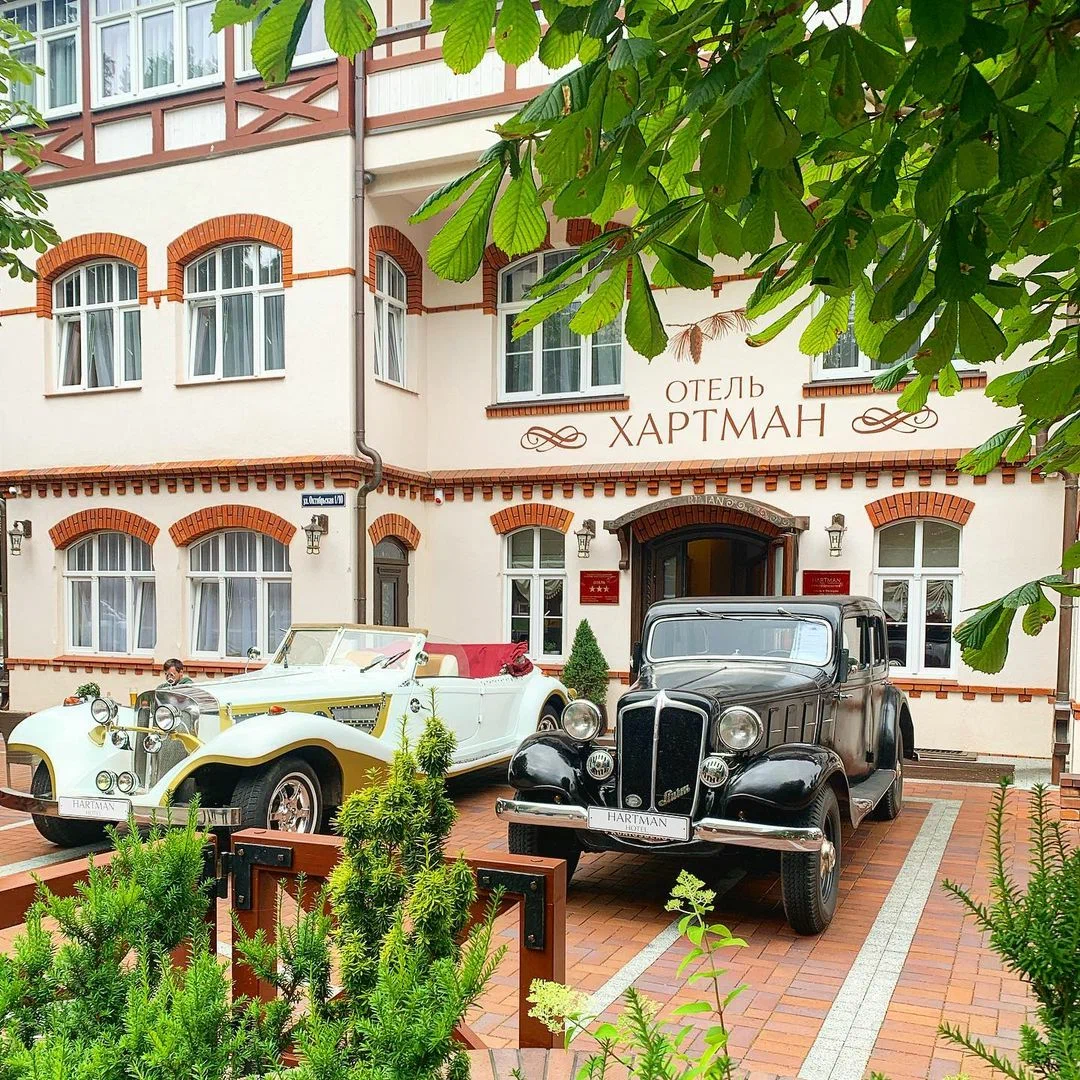
A hotel with more than a century of history and traditions of hospitality. It was first mentioned in 1910 as the summer hotel Waldesrand (German: Waldesrand - Forest Edge). In 1925, the new owner, Willi Hartmann, radically changed the concept of the establishment. The hotel became a year-round property: the building was insulated, the interior was changed and a restaurant opened at the hotel. The name also changed, and the hotel became Hotel Hartmann. Its hospitality and excellent cuisine brought it well-deserved success; even Walter Norgall, the burgomaster of Rauschen, was among the admirers of the Hartmann house. After the war, the hotel became one of the buildings of a sanatorium of the Ministry of Health of the RSFSR. Today, Hartman is a modern hotel with a history in the center of Svetlogorsk.
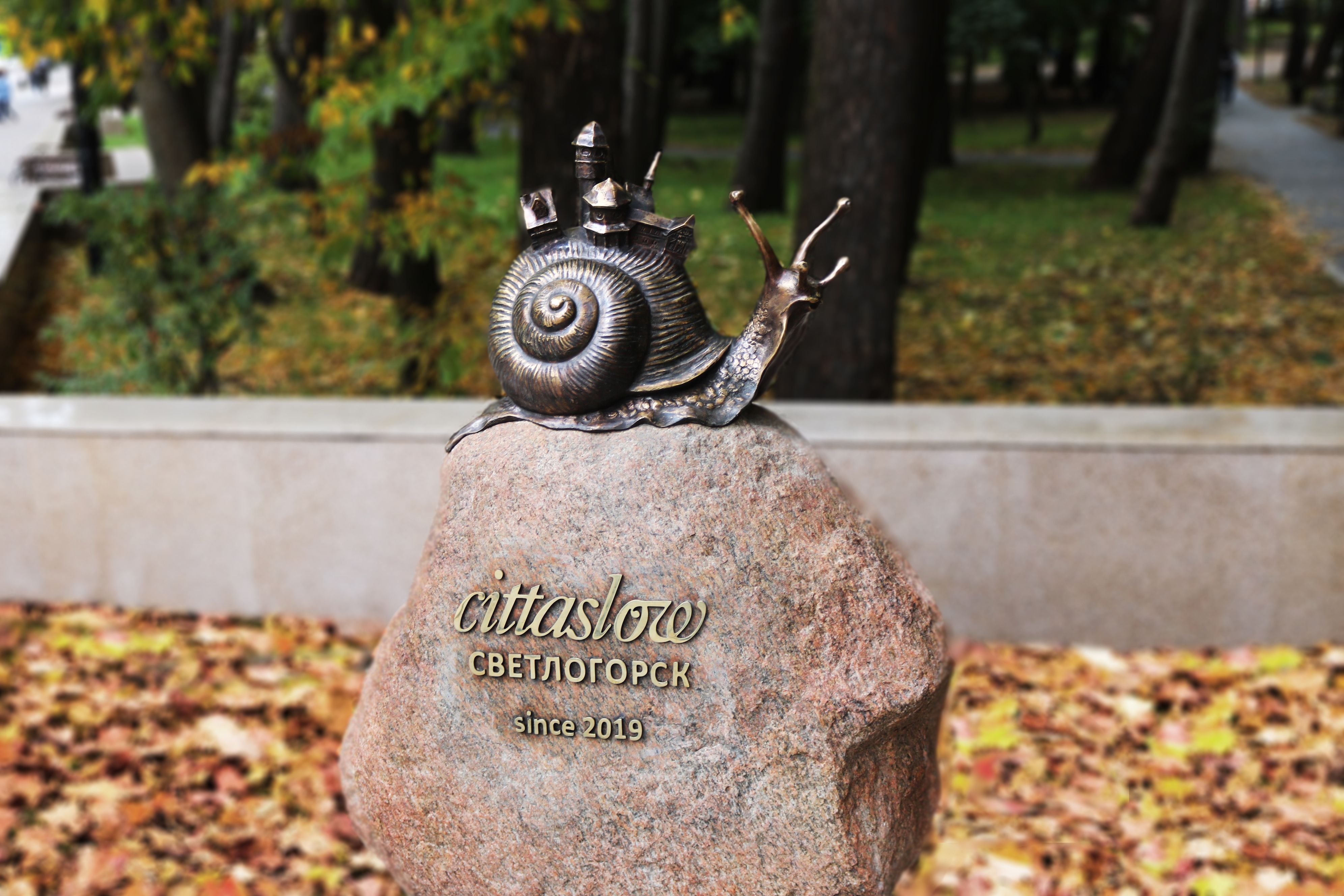
In 2019, Svetlogorsk became the first Russian city admitted to the international Cittaslow association of cities. The association's name comes from the Italian citta, meaning city, and the English slow. Founded in Italy in 1999, the movement includes around 240 cities worldwide. Its principles are to improve quality of life by slowing the pace of urban life, enjoying the uniqueness of each city, and resisting uniformity and standardisation. Cities in the association support local cuisine, the creation of new green and pedestrian areas, clean technologies and the production of handmade goods, while fostering an atmosphere of good neighbourliness and hospitality. The symbol of Cittaslow is a snail. Local residents proposed creating a sculpture symbolising Svetlogorsk's participation in the Cittaslow movement. The sculpture was funded by the municipal enterprise Svetlogorsk Parks with the support of the administration of the Svetlogorsk Urban District. The sculpture was installed in September 2021. Sculptor: Andrey Shevtsov.
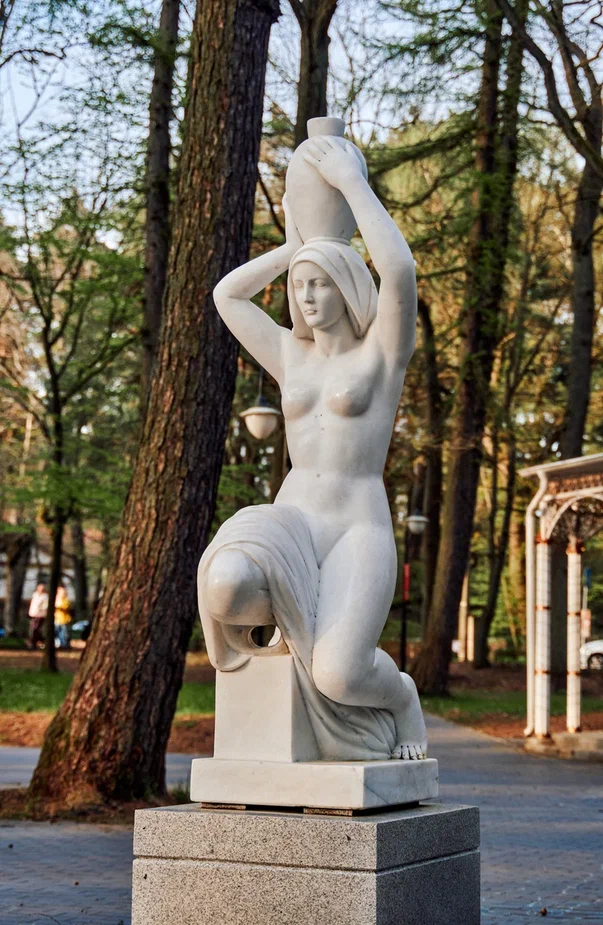
The Water Carrier sculpture (German: Wassertraegerin) was created in marble in 1940 by the renowned German sculptor Hermann Brachert (1890-1972) in Georgenswalde, now the western part of Svetlogorsk and formerly Otradnoye, in the workshop on the grounds of the house where the sculptor's family lived. From 1944 to 2002, the sculpture stood in Listvennichny Park (Larch Park), but because it was at risk of complete destruction, it was dismantled on October 15, 2002 and taken to the Hermann Brachert House Museum for restoration, where it remains today. A precise copy of the sculpture was produced at the Hermitage to replace the original and installed in the park at its former location in 2005. In 2020, during the reconstruction of Listvennichny Park, the copy was transferred to the Kaliningrad Museum of Fine Arts. Today, a new marble copy of the sculpture stands in the park. It is a cultural heritage site of regional significance.
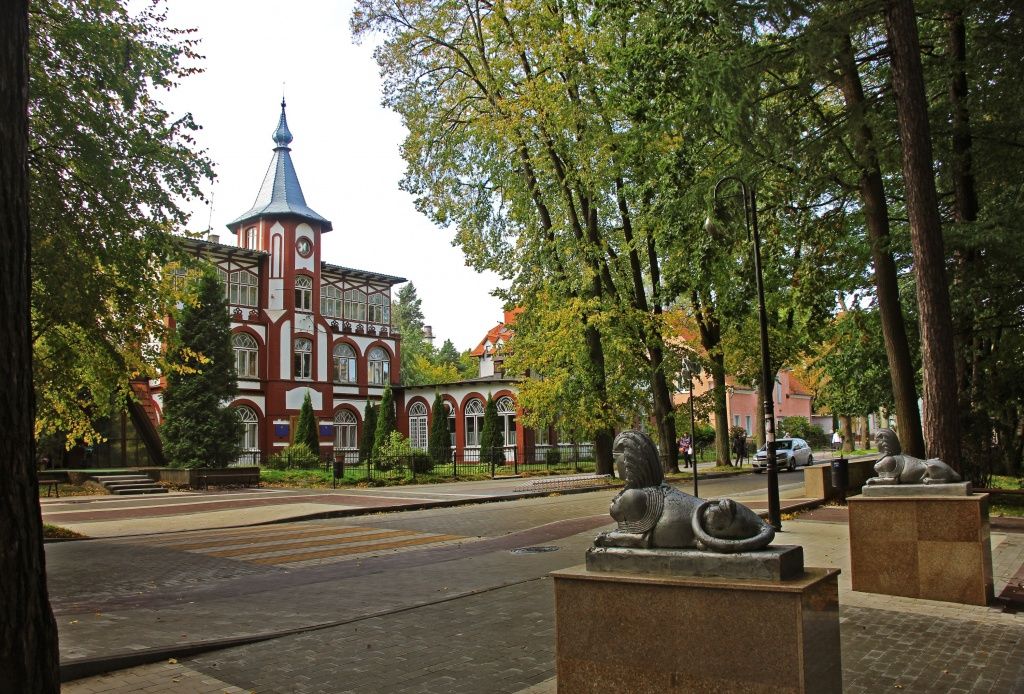
The building of the former Zeeshtern Hotel. The Seestern Hotel was built in the early years of the 20th century on Promenade Street in Rauschen. The architect incorporated many interesting solutions that were not repeated elsewhere at the resort. The hotel's huge windows facing the newly established Larch Park served as a kind of "theatre balcony", allowing guests to enjoy live music at any time.
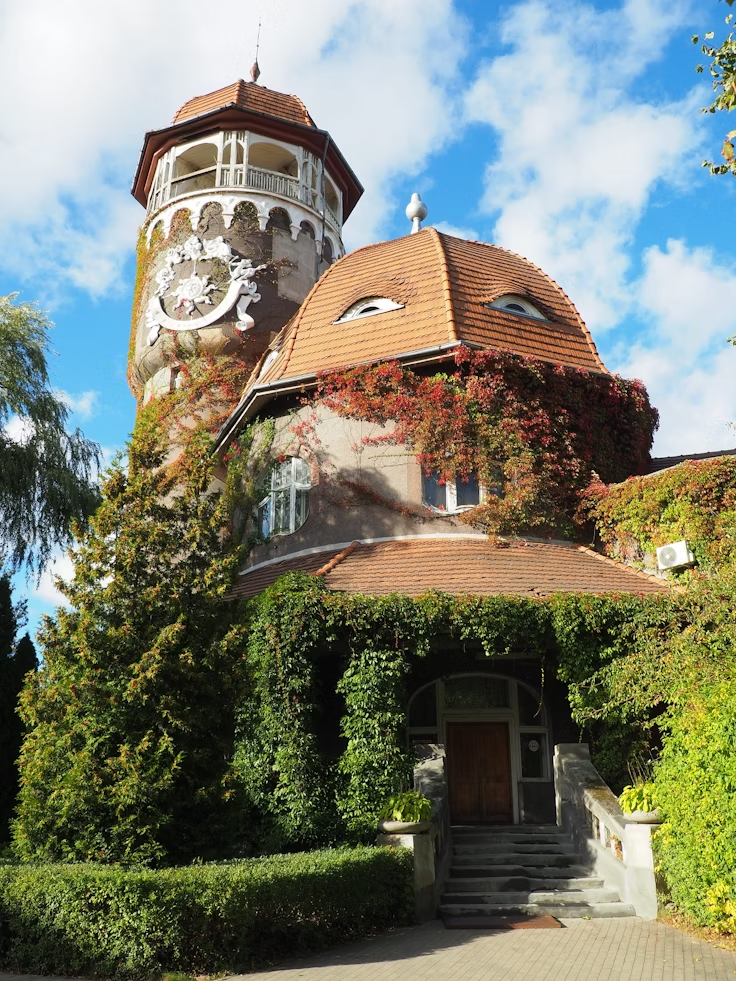
The building of the seawater and mud treatment facility with a 25-metre water tower (German: Wasserturm Rauschen) was erected in 1900-1908 to a design by architect Otto-Walter Kuckuck. Built in the National Romantic style, it became the dominant feature and organising element of the upper, dune-side part of Rauschen. The tower supplied Rauschen with water drawn from springs near Melnichny Prud (Mill Pond), now Tikhoye Lake. At the water and mud treatment facility, visitors could take warm seawater and carbon dioxide baths and receive mud, electrical and light therapy, as well as therapeutic massage. In 1978, the tower was decorated with a sundial created by Svetlogorsk artist and monumental sculptor N.P. Frolov. Beneath the helmet-shaped roof is an observation deck overlooking the town and its surroundings. Today, the tower and the operating water and mud treatment facility are part of the Svetlogorsk Military Sanatorium. It is a cultural heritage site of regional significance.
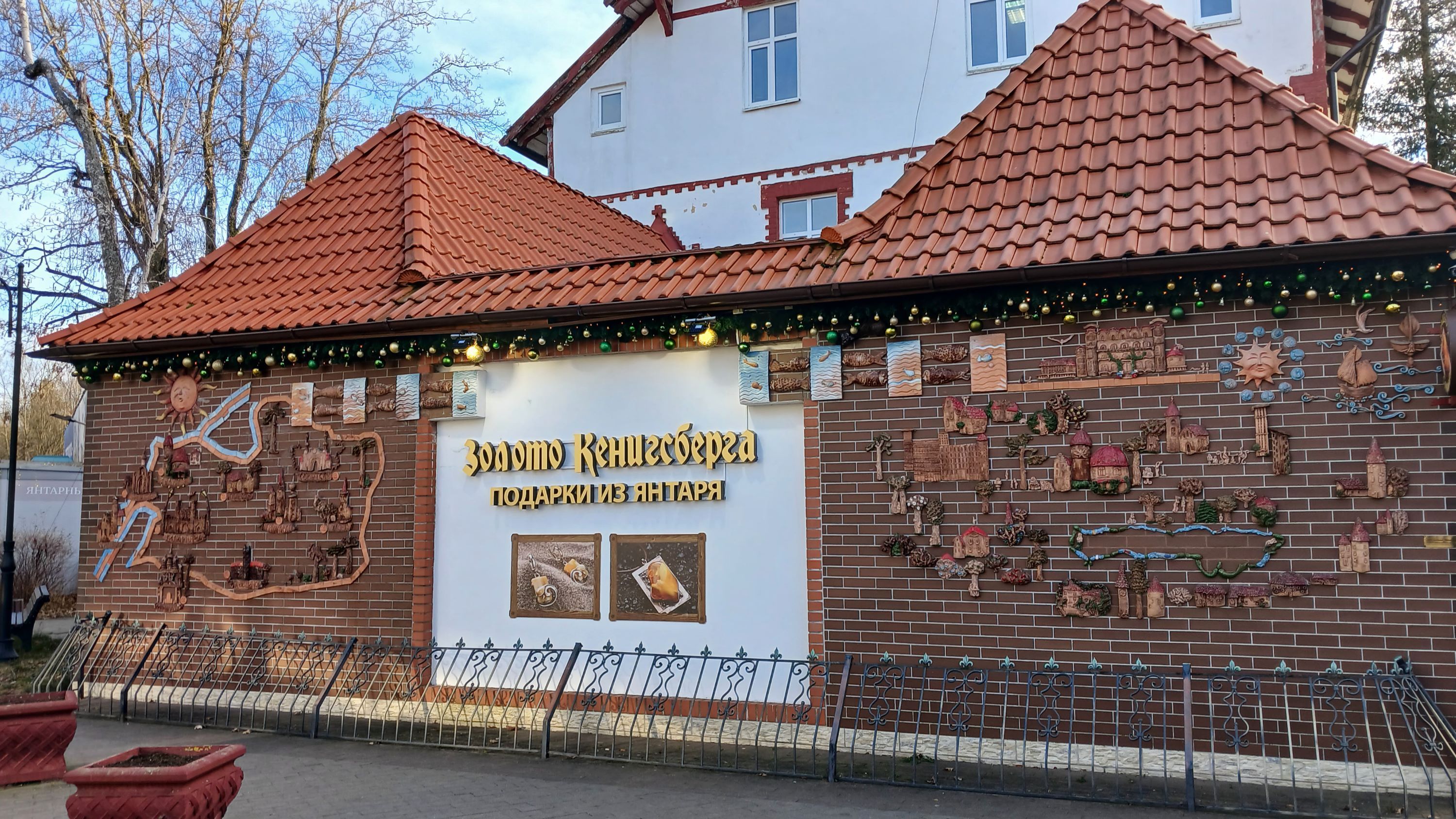
The decorative ceramic panel Tales of Svetlogorsk was created in 2007. Project author: Nikolay Pavlovich Frolov. Ceramics: N. Stakhorskaya and A. Stakhorskiy. The project was commissioned by the Ayni International Insurance Company. The panel is located on the building of the former Villa Hildegard, which has survived almost in its original form. Before the First World War, rooms were rented here to holidaymakers, while a retail pavilion occupied the annex with large windows. In April 1945, a hospital for Red Army soldiers was set up in the building, followed by the administration of the military sanatorium, which remains here to this day. In the post-war period, books were sold in the annex; today it houses a jewellery and souvenir shop.
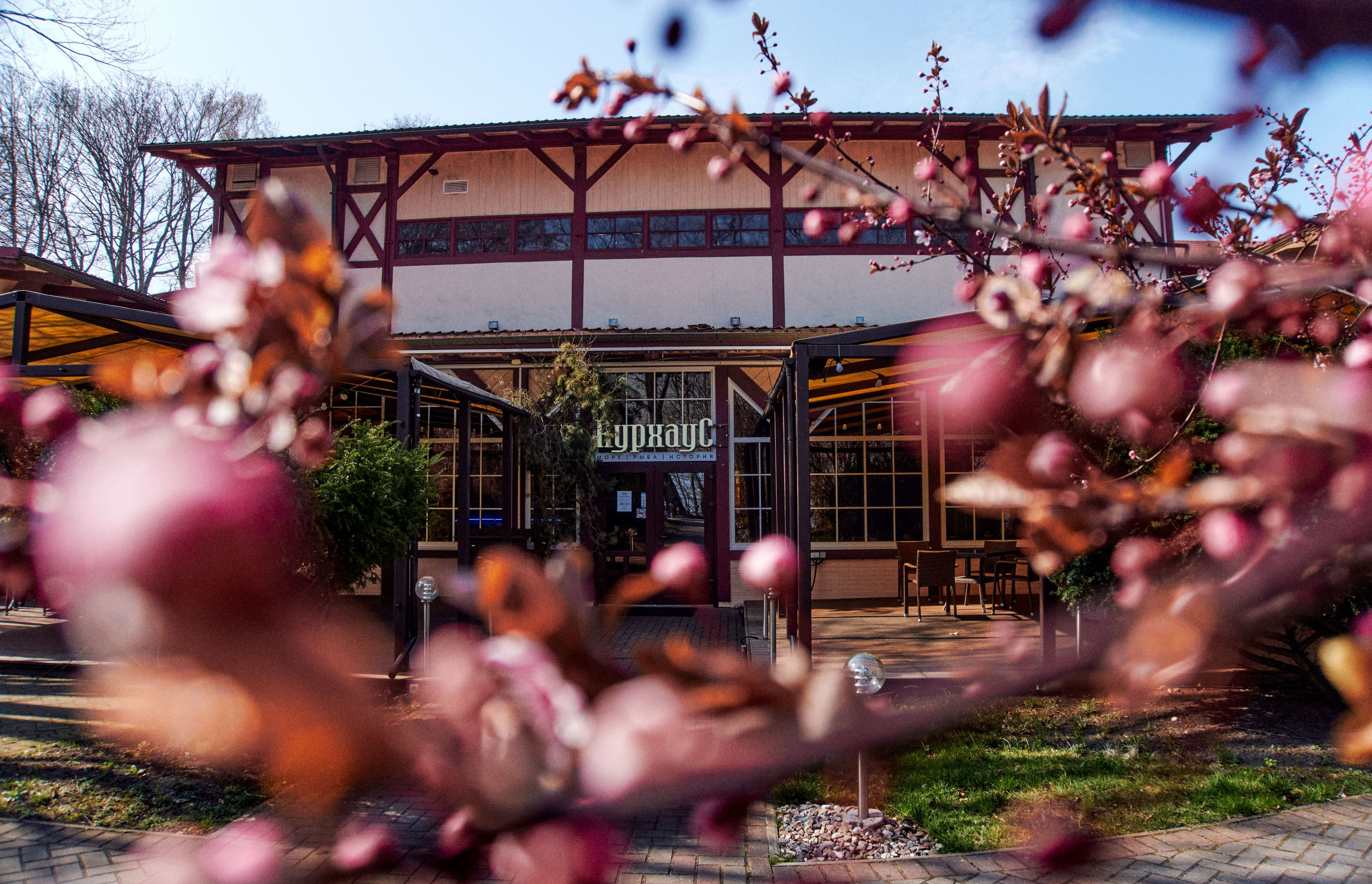
The Rauschen Kurhaus (German: Kurhaus, resort house) was built in 1901. In German resort towns, Kurhaus status was granted to a hotel that served as the center of resort life, taking into account its elegance, convenient location and facilities for holidaymakers' entertainment. The building was designed in a style typical of German seaside towns in the early 20th century, with elements of Jugendstil, the German term for Art Nouveau. Spacious glazed verandas were used for reading newspapers, playing billiards and card games. Concerts were held in the large hall, which from August 2, 1903 also hosted Lutheran services for holidaymakers throughout the resort until a church was built in Rauschen. The Kurhaus complex also included three wooden buildings whose rooms were rented to holidaymakers only during the summer season. A distinctive feature of the Rauschen Kurhaus was that it did not belong to the town but was a private establishment owned by the Kempf family. The building was reconstructed in 2002 and today houses a restaurant complex of the same name. It is a cultural heritage site of regional significance.
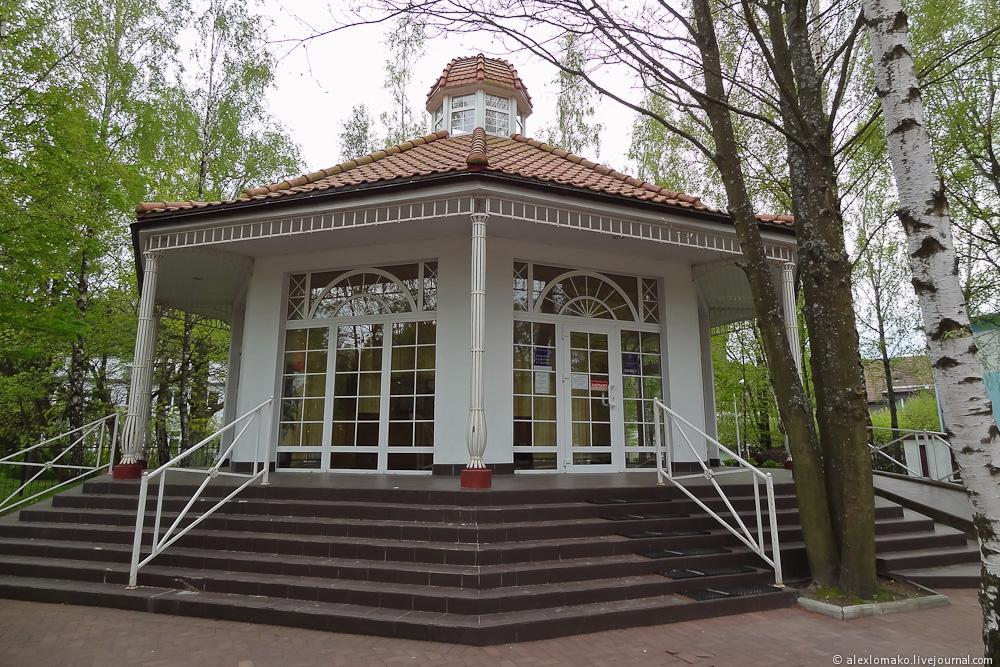
Along with the therapeutic climate and medicinal mud, mineral water is one of the resort's main natural therapeutic resources. Mineral waters from Svetlogorsk springs are predominantly sodium bicarbonate-chloride waters with elevated iodine and fluoride content and are used for drinking therapy. Bromide sodium chloride brines are used for balneological procedures. The mineral-water pump room opened in 2010 and belongs to the Svetlogorsk Military Sanatorium. In 2024, the city also has a municipal pump room on the seaside promenade near the Zodiac sundial.
.jpg)
The small square lies between Lenina Street and Kurortnaya Street and is surrounded by the Fachwerk-style buildings of the Rauschen shopping complex, with numerous souvenir stalls, shops and cafes. The fountain featuring the fairy-tale Gauya Bird, a decorative amber apple tree, the Bench of Reconciliation and a model of Kneiphof Island located in the square are local attractions. The Russian Amber shop on the square houses a forged chest containing the world's longest and heaviest string of amber beads. The string is 1,420 metres long and weighs 91 kg 800 g.
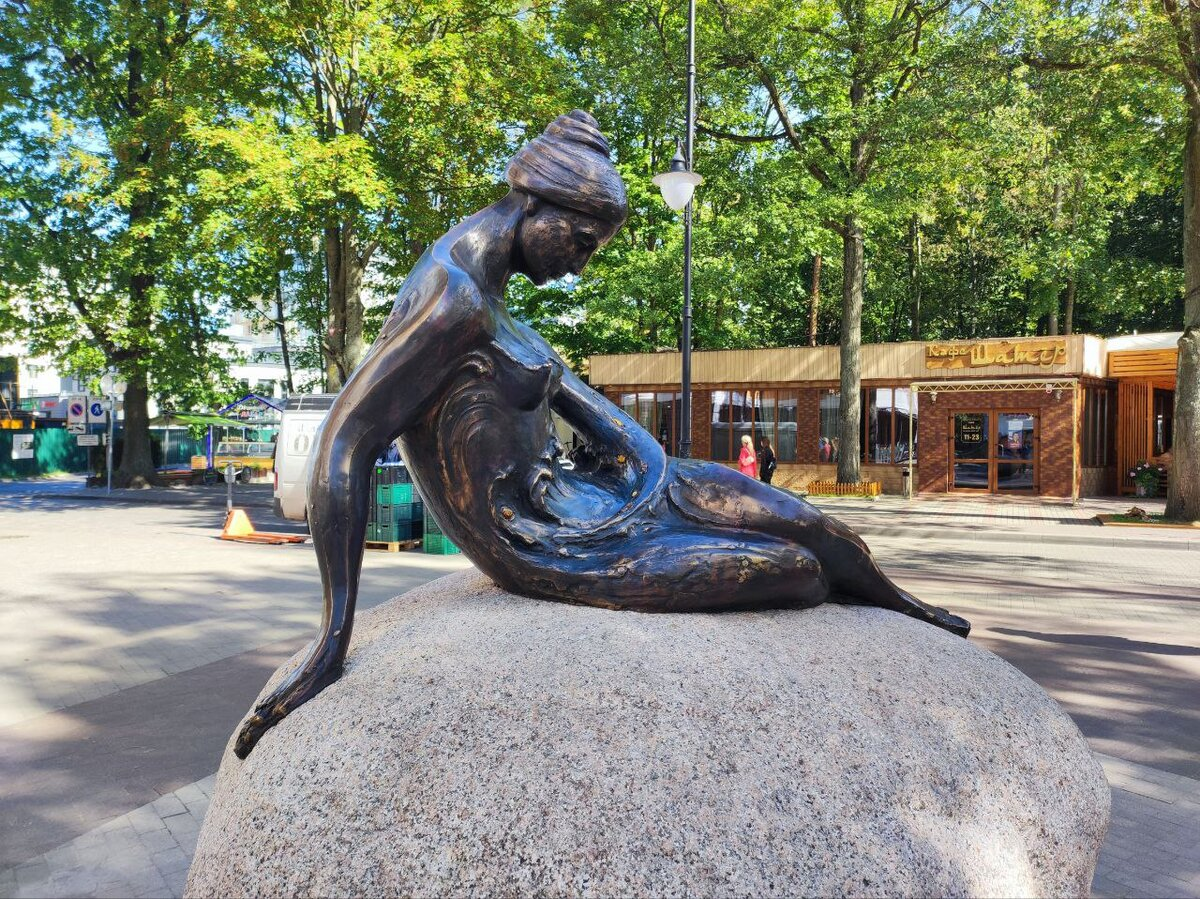
The sculpture is inlaid with pieces of amber and personifies a Baltic wave. According to the artist's concept, it is a composite image associated with the Baltic Sea, as unpredictable and incredibly beautiful as a woman's nature, and with its gift, amber. There are no fixed proportions or sharply defined forms: the sculptor depicted the symbol of a wave, so all the curves are soft and streamlined. Author: Andrey Shevtsov, 2022, bronze.
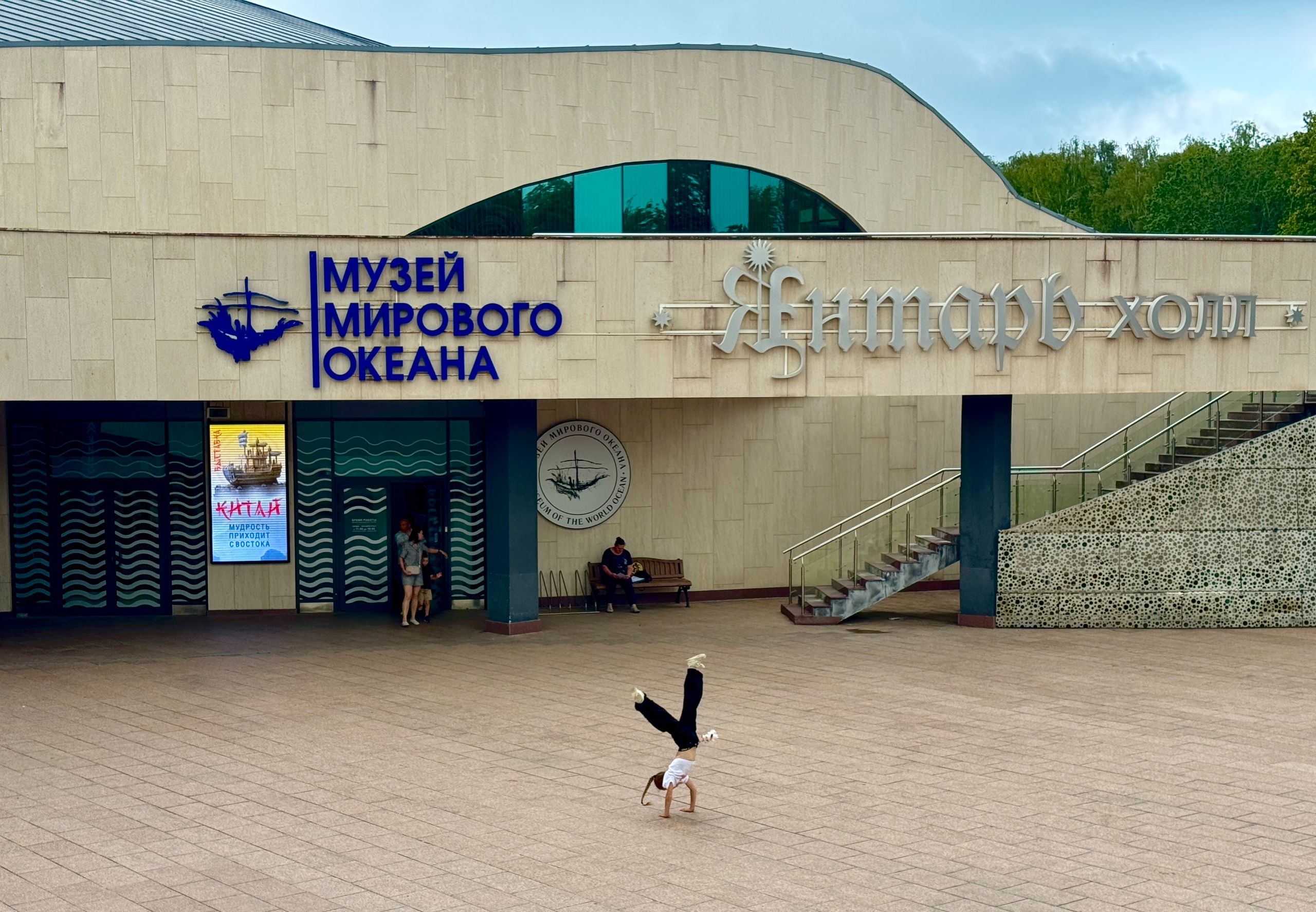
Amber Hall is a modern multifunctional cultural center located on the shore of the Baltic Sea in Svetlogorsk. It was built using the latest technologies and principles of entertainment event organisation. Amber Hall is one of the most visited cultural venues in the Kaliningrad Region. Under one roof with its impressive concert hall are a business center with six well-equipped conference halls, shops, cafes and restaurants, a cinema, a children's entertainment center, and a branch of the Museum of the World Ocean.
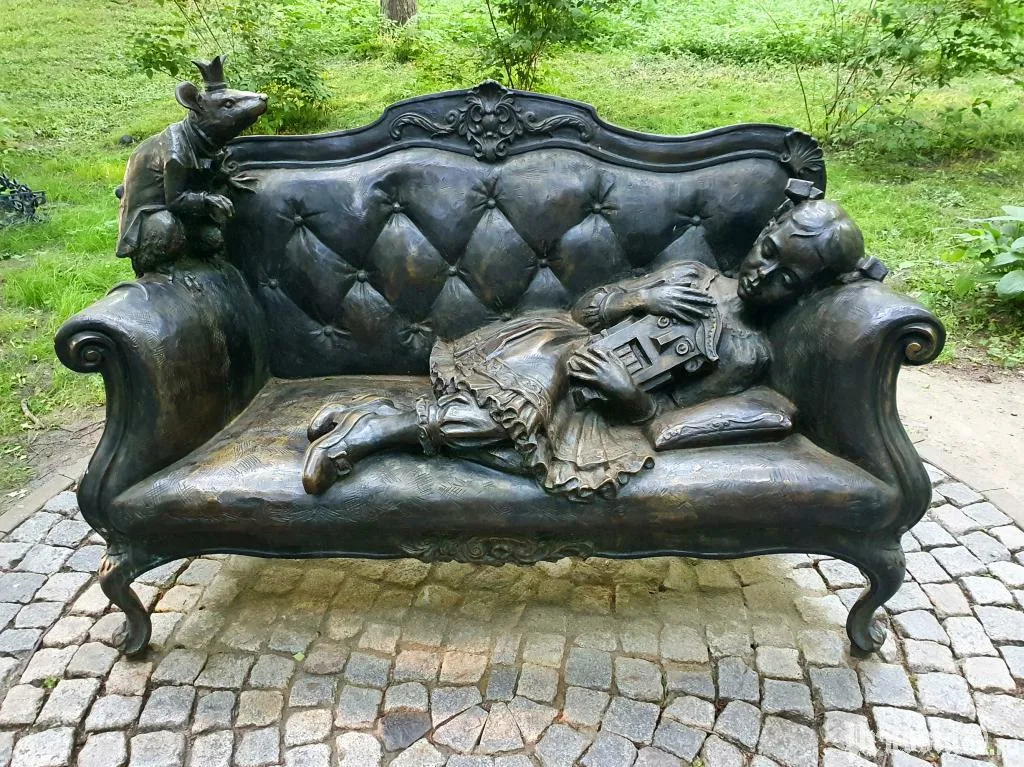
The Sleeping Marie sculptural composition, created by sculptor Andrey Shevtsov in 2019 based on E.T.A. Hoffmann's fairy tale The Nutcracker and the Mouse King, is installed in the picturesque Vremena Goda (Seasons) Park. The Sleeping Marie composition is a bench with figures of Marie, the heroine of the story, and the Mouse King, who sits on the armrest of the bench and looks at the sleeping girl.
Popular routes
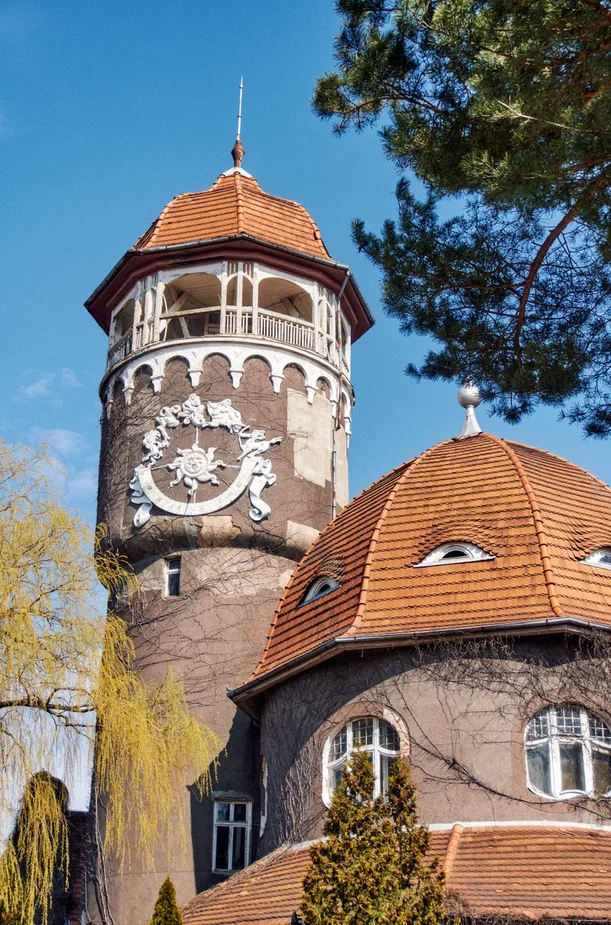
Country houses, villas and boarding houses were built in park areas and blended harmoniously into the surrounding landscape. Follow the route to discover the architectural monuments that have survived to this day.
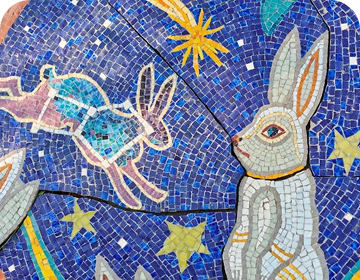
The history of mosaics in Svetlogorsk begins with the famous Zodiac sundial by Nikolay Pavlovich Frolov, created in the 1970s. Artists from the annual Svetlogorsk festival The Sea Within decided to continue this tradition and, with the support of the administration of the Svetlogorsk Urban District, created the Mosaic Route project, a virtual museum based on contemporary atmospheric surrealist art. The route not only encourages visitors to take a closer look at Svetlogorsk's unique nature and architecture, but also introduces contemporary cultural events at the resort: exhibitions, concerts, festivals, film screenings, workshops and musical picnics with the route's characters. The project organisers hold quest walks where participants can receive an exclusive route map showing all 25 art objects of the open-air museum and immerse themselves in the history of Svetlogorsk's mosaic heritage.
A map of the quest route for independent exploration can be purchased at the Information and Tourist Center of Svetlogorsk.

The Perfect Angle tourist route helps you take more interesting photographs in Svetlogorsk. Look for droplet-shaped signposts near the town’s attractions: they mark the places from which the best photographs can be taken. Symbols on the signs indicate the best time and position for taking a photograph, the position of the smartphone, and a QR code leading to the Svetlogorsk Tourist Information Center website, where information about all the route’s attractions is available.
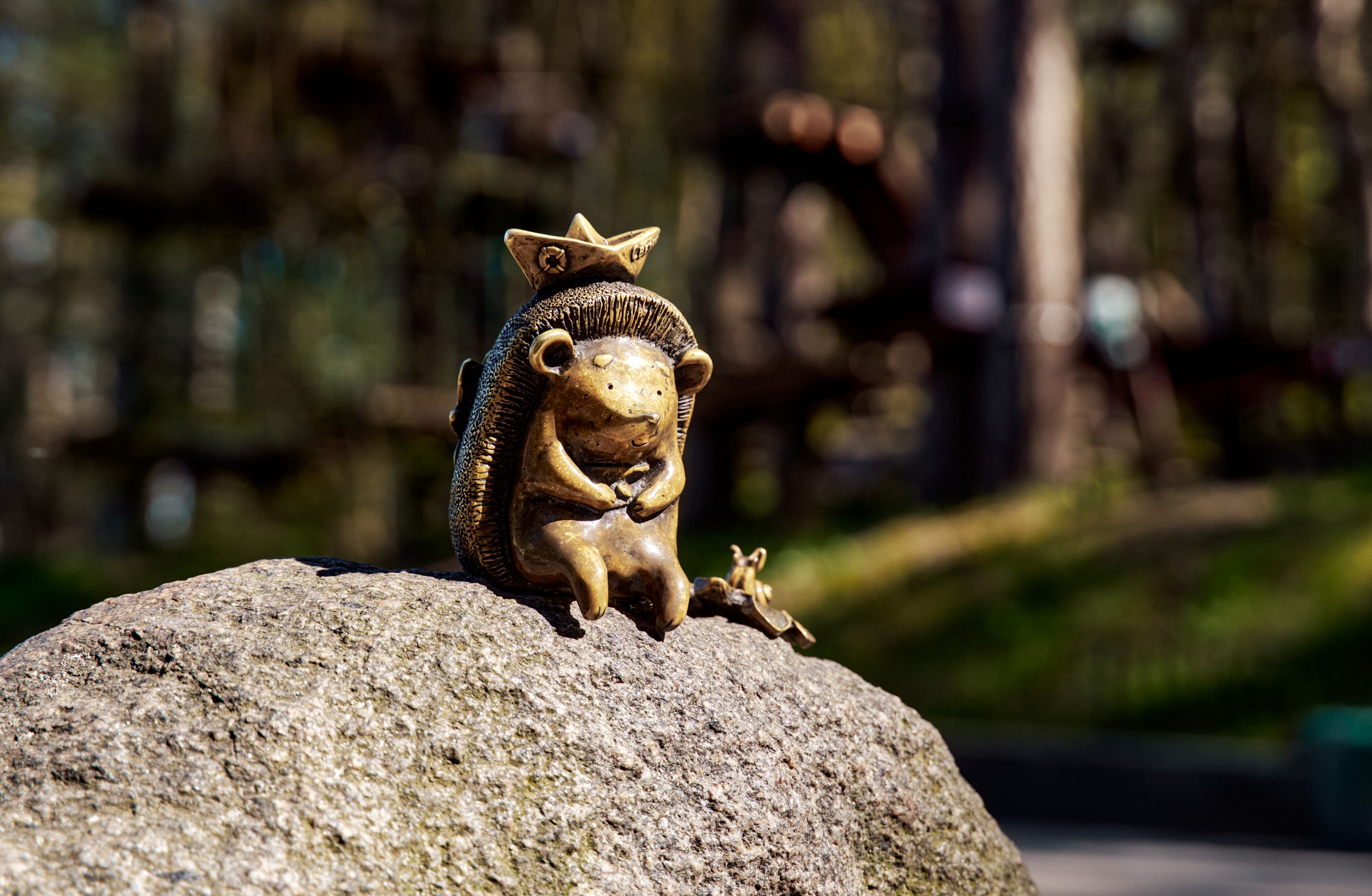
Svetloyozhiki is a children’s quest route created by the authors of the Mosaic Route and laid out around Lake Tikhoye in Svetlogorsk.